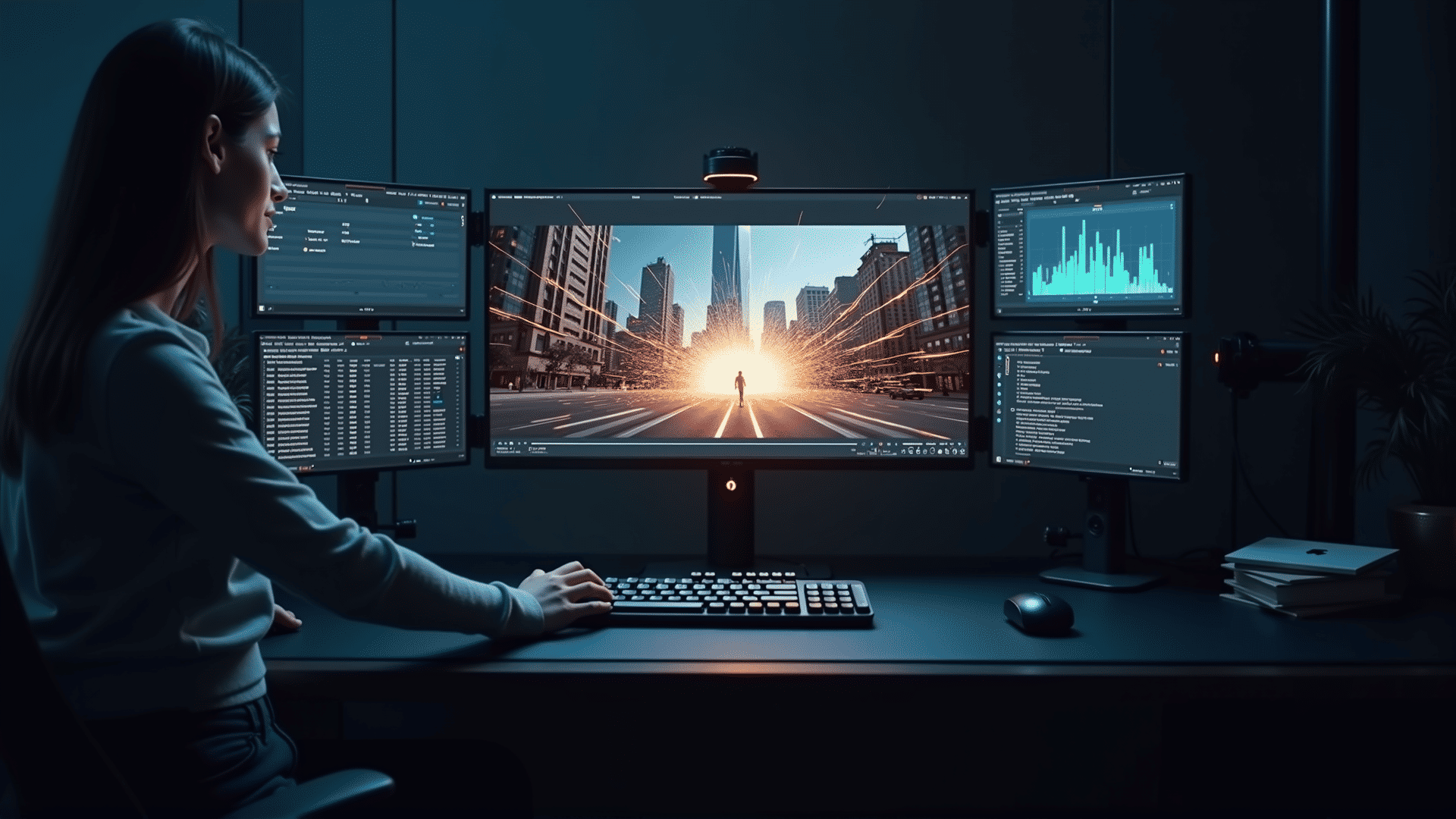
As the world of cinema and digital content continues to evolve, an exciting transformation is taking place. This change is largely driven by the incorporation of artificial intelligence (AI) into the realm of visual effects, creating breathtaking visuals that capture the imagination and enhance storytelling.
The integration of AI into visual effects offers filmmakers unprecedented tools to craft captivating narratives with ease. This innovative technology is capable of automating complex tasks that previously required extensive human effort and time. By streamlining processes such as rendering, compositing, and animation, AI enables visual artists to focus on creativity and innovation.
One of the most significant contributions of AI in visual effects is its ability to generate realistic imagery. Deep learning algorithms can analyze vast datasets of visual information to create stunning landscapes and lifelike characters that blend seamlessly into live-action footage. This has opened new doors for filmmakers to explore fantastical worlds that would have been prohibitively expensive or technically challenging using traditional methods.
Moreover, AI is revolutionizing the editing process by providing tools that allow for automatic color correction, object removal, and even style transfer. With these capabilities, editors can efficiently craft scenes that maintain the director's vision while ensuring visual consistency and improved aesthetic appeal. This not only saves valuable time but also elevates the production quality.
AI-driven tools are also facilitating the creation of dynamic de-aging and rejuvenation effects. Through machine learning techniques, visual effects teams can produce convincing transformations that maintain actors' performances while manipulating their on-screen appearance. This allows for storytelling that spans across different time periods without the constraints of aging.
Furthermore, AI is enhancing motion capture technology, making it more accessible and efficient. By analyzing movement with pinpoint accuracy, AI systems can create more nuanced and natural character animations. This aids actors in delivering performances that can be faithfully translated into digital environments, enriching storytelling with deeper character engagement.
The benefits of AI in visual effects extend beyond technical advancements. By reducing the overall cost and time associated with producing high-quality visual content, creators are empowered to take creative risks and explore innovative stories. This democratization of technology fosters a more diverse range of voices and narratives, broadening the appeal and reach of visual media.
As AI continues to mature, it promises even greater contributions to the visual effects industry. The continual development of algorithms and tools will likely lead to further innovations, allowing filmmakers to push the boundaries of what can be visualized on-screen. The collaboration between human creativity and artificial intelligence heralds a new era, where the only limits are those of our imagination.